Angin AC Kecil tidak berasa
Terkadang, AC mobil suka tidak dingin lagi setelah lama dipakai. Jika blower AC diset dengan kecepatan tinggi dan AC tidak terasa, kemungkinan masalahnya ada di filter kabin
Kadang-kadang kalau mobil baru, anginnya 1 udah kencang banget. Tapi lama-lama dipakai, anginnya 1 kayak nggak ada anginnya.
Kalau angin yang dikeluarkan blower-nya sudah tidak terasa, Anda perlu mengecek filter kabin. Ada kalanya filter kabin rutin diganti.
Filter kabin tidak disarankan untuk dibersihkan atau disemprot. Kalau sudah kotor, sebaiknya filter kabin diganti saja.
Filter karena bahannya kertas, kalau dibersihkan fungsi penyaringannya menurun. Kalau penyaringannya menurun fungsi filter nggak ada gunanya.
Berapa lama filter kabin diganti? penggantian filter kabin tergantung dengan pemakaiannya
Showing posts with label Air filter. Show all posts
Showing posts with label Air filter. Show all posts
How often should I replace my air filter?
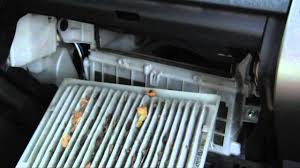
Cars mostly have a cabin air filter that catches dirt, debris and some allergens in the air that goes through the heating, ventilation and air-conditioning systems. Cabin air filters need periodicly changing, but not more frequently than engine air filters.
How often should I replace my air filter?
Many manufacturers recommend every two years but say it should happen more often if most of your driving is done in an urban area with heavy traffic and poor air quality, or if you drive in frequently dusty conditions. Air filters aren't that expensive, so replacing them annually shouldn't break the bank.
How do I know when it's time to replace my air filter?
You should change your air filter when it gets dirty enough to restrict airflow to the engine, which reduces acceleration. When that will happen depends on where and how much you drive, but you (or your mechanic) should check the engine air filter at least once per year. If you frequently drive in an urban area or in dusty conditions, you'll probably need to change it more often than if you live in the country, where the air is typically cleaner and fresher.
Why do I need to change my air filter?
The filter cleans the air that goes into the engine, catching particles that could damage internal engine parts. Over time the filter will get dirty or clogged and restrict air flow. A dirty filter that restricts air flow will slow acceleration because the engine isn't getting enough air. EPA tests concluded that a clogged filter will hurt acceleration more than it hurts fuel economy.
Cars mostly have a cabin air filter that catches dirt, debris and some allergens in the air that goes through the heating, ventilation and air-conditioning systems. Cabin air filters need periodicly changing, but not more frequently than engine air filters.
How often should I replace my air filter?
Many manufacturers recommend every two years but say it should happen more often if most of your driving is done in an urban area with heavy traffic and poor air quality, or if you drive in frequently dusty conditions. Air filters aren't that expensive, so replacing them annually shouldn't break the bank.
How do I know when it's time to replace my air filter?
You should change your air filter when it gets dirty enough to restrict airflow to the engine, which reduces acceleration. When that will happen depends on where and how much you drive, but you (or your mechanic) should check the engine air filter at least once per year. If you frequently drive in an urban area or in dusty conditions, you'll probably need to change it more often than if you live in the country, where the air is typically cleaner and fresher.
Why do I need to change my air filter?
The filter cleans the air that goes into the engine, catching particles that could damage internal engine parts. Over time the filter will get dirty or clogged and restrict air flow. A dirty filter that restricts air flow will slow acceleration because the engine isn't getting enough air. EPA tests concluded that a clogged filter will hurt acceleration more than it hurts fuel economy.
Auto Trans Fluid & Filter Replacement DIY instructions
Auto Trans Fluid & Filter Replacement DIY instructions
This first section answers some FAQs and gives some background to the fluid and replacement procedures, the second covers tools and materials, the third & fourth involves the trans fluid, and the fifth filter replacement.
General Info & Details:
how do I check the fluid level? Check the level with the fluid hot. Not just "drive around the block warm," you want to drive at least 5-10miles/15 minutes or so. The vehicle should be parked in a level spot. With the motor still running, slowly run the gear selector up and down thru all the gear positions. Return it it park and shut the motor off. Pull the dipstick immediatly, wipe it off and reinsert it. Pull it out and look at the level. It should be near the top of the range. Check the fluid for "condition" also....you want it to be a nice bright red color and not smell burnt. When reinstalling the dipstick be sure to position the handle facing towards the breather pipe next to the dipstick hole.
when should the fluid be changed? According to my owners manual, every 120k miles or so. I think it may have been reduced to 90k on some newer model. It is rather vague about changing it based on “condition.” Either way, this is not often enough IMHO. I suggest every 60k, or even sooner if you tow often or the vehicle gets used hard. I’ve been doing mine about every 20k miles since it reached 30k.
If your fluid looks dirty, isn’t a nice red/dark red color, or smells burnt, it needs to be changed.
When the fluid is drained, about 60% of it stays in the trans/torque converter. More frequent changes ensure there is plenty of good fluid in your transmission.
what about “flushing” the transmission? Be careful, the term often means that a “power flush” is performed and may include chemicals not normally found in Honda trans fluid. Honda says do not do this. I agree, and so do many others.
If by “flushing” you/they mean draining the fluid, refilling, operating the car a bit, and then repeating the drain & fill process several times, then it is a perfectly acceptable way of replacing the fluid.
where is the filter? The dealer says it doesn’t have one? It has an inline filter located low and just in front of the radiator. Honda says replacement is only necessary if the transmission is rebuilt or replaced. I like to replace it every other fluid change, but I’m sure every 60k miles is plenty.
what kind of fluid do I need? Can I use synthetic? Honda recommends replacement with Honda ATF-Z1 only. I personally don’t recommend anything else, but some claim good results (or bad results!) with aftermarket fluids. Use the search feature and your best judgments and please don’t clog this DIY thread up with fluid, Amsoil, etc discussion.
The official Honda specified fluid capacities are:
4wd - 3.3 quarts at change, and holds 7.6qt overall
2wd - 3.4qt at change, and holds 7.2qt overall
what about drain plug torque specifications? The drain plug is M18x1.5 pitch and should be torqued to 36lb-ft (49N-m). It uses a special crush washer.
I overheated the trans and now the fluid smells bad, what should I do? Change it. Do a full “flush,” drain & fill and repeat 3 times. It may save it, or at least prolong replacement.
What about a transmission cooler? The Element has one built into the radiator. It should be flushed (or replaced) whenever the trans is replaced or rebuilt to avoid contaminating the new trans. An auxilary tran cooler is a good idea for anyone that does serious towing. Do a search and/or check the towing section of the EOC for more information. Most install "inline," much like the filter.
This first section answers some FAQs and gives some background to the fluid and replacement procedures, the second covers tools and materials, the third & fourth involves the trans fluid, and the fifth filter replacement.
General Info & Details:
how do I check the fluid level? Check the level with the fluid hot. Not just "drive around the block warm," you want to drive at least 5-10miles/15 minutes or so. The vehicle should be parked in a level spot. With the motor still running, slowly run the gear selector up and down thru all the gear positions. Return it it park and shut the motor off. Pull the dipstick immediatly, wipe it off and reinsert it. Pull it out and look at the level. It should be near the top of the range. Check the fluid for "condition" also....you want it to be a nice bright red color and not smell burnt. When reinstalling the dipstick be sure to position the handle facing towards the breather pipe next to the dipstick hole.
when should the fluid be changed? According to my owners manual, every 120k miles or so. I think it may have been reduced to 90k on some newer model. It is rather vague about changing it based on “condition.” Either way, this is not often enough IMHO. I suggest every 60k, or even sooner if you tow often or the vehicle gets used hard. I’ve been doing mine about every 20k miles since it reached 30k.
If your fluid looks dirty, isn’t a nice red/dark red color, or smells burnt, it needs to be changed.
When the fluid is drained, about 60% of it stays in the trans/torque converter. More frequent changes ensure there is plenty of good fluid in your transmission.
what about “flushing” the transmission? Be careful, the term often means that a “power flush” is performed and may include chemicals not normally found in Honda trans fluid. Honda says do not do this. I agree, and so do many others.
If by “flushing” you/they mean draining the fluid, refilling, operating the car a bit, and then repeating the drain & fill process several times, then it is a perfectly acceptable way of replacing the fluid.
where is the filter? The dealer says it doesn’t have one? It has an inline filter located low and just in front of the radiator. Honda says replacement is only necessary if the transmission is rebuilt or replaced. I like to replace it every other fluid change, but I’m sure every 60k miles is plenty.
what kind of fluid do I need? Can I use synthetic? Honda recommends replacement with Honda ATF-Z1 only. I personally don’t recommend anything else, but some claim good results (or bad results!) with aftermarket fluids. Use the search feature and your best judgments and please don’t clog this DIY thread up with fluid, Amsoil, etc discussion.
The official Honda specified fluid capacities are:
4wd - 3.3 quarts at change, and holds 7.6qt overall
2wd - 3.4qt at change, and holds 7.2qt overall
what about drain plug torque specifications? The drain plug is M18x1.5 pitch and should be torqued to 36lb-ft (49N-m). It uses a special crush washer.
I overheated the trans and now the fluid smells bad, what should I do? Change it. Do a full “flush,” drain & fill and repeat 3 times. It may save it, or at least prolong replacement.
What about a transmission cooler? The Element has one built into the radiator. It should be flushed (or replaced) whenever the trans is replaced or rebuilt to avoid contaminating the new trans. An auxilary tran cooler is a good idea for anyone that does serious towing. Do a search and/or check the towing section of the EOC for more information. Most install "inline," much like the filter.
Cleaning Throttle Body
Cleaning the throttle body on a fuel injected engine is one of the most effective ways of restoring idle quality, performance and fuel efficiency
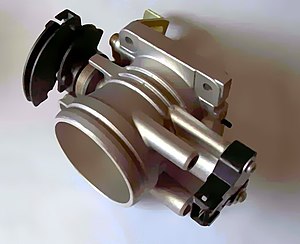
Park your vehicle outside in a well-lighted, level area. Because the throttle-body cleaners are volatile, we do not recommend doing this job indoors.
Locate the throttle body under the hood in the engine compartment. Here are some hints on what to look for:
- The throttle body is located between the air cleaner and the intake manifold of the engine.
- Most throttle bodies are made of aluminum.
- The throttle body is connected to the gas pedal of your vehicle with a linkage or flexible cable, which moves the throttle shaft when the gas pedal is depressed. (If you're having difficulty locating the throttle body, ask a helper to press the accelerator - with the engine off - so you can see the movement of the throttle shaft.)
There may be one or more electrical wires that connect to the throttle body. Do not disturb these; for purposes of this project, you should not need to disconnect any of these terminals.
While we always recommend that you follow all appropriate safety precautions for these DIY projects, this is even more important for this project. Do not smoke when you are working on your vehicle, wear all recommended skin and eye protection and generally be aware that you are dealing with a flammable spray cleaner.


Subscribe to:
Posts (Atom)