Showing posts with label used car. Show all posts

STEPS TO BUYING A USED CAR 3

 STEPS TO BUYING A USED CAR 3


Step 3: Find Your Car's Value

Used Vehicle from a Dealer
If you visit a large, reputable dealer with a brand franchise, there will likely be a variety of used vehicles for sale on the lot. Although not necessarily backed by the manufacturer, these vehicles may include an extended or "aftermarket" warranty or service program offered by the dealer. Because dealers offer warranties and service programs, the used cars they sell must be refurbished to meet warranty standards. In truth, most vehicles in the used inventory of a brand-franchised dealer will not have been taken in trades for new cars at that dealership, but will instead have been purchased at one of the numerous auctions where dealers buy and sell used cars to and from each other. This means that most used cars any dealership takes in trades will be sold at those auctions, and for a variety of reasons. Perhaps a vehicle isn't in good condition, or maybe it doesn't fit within the mix that dealership prefers for its used inventory. The truth is, most cars that get traded for something newer aren't in very good shape; that's why their owners are getting ride of them.

Pricing for retail cars at a dealership will vary, but because of the refurbishing a dealer must do to ready the car or truck for sale, the retail price of the used car will typically be more than a private party price.

Used Vehicle from a Private Party
It's unfortunate that in this day and age we must be wary of buying from individuals, but this is where the risk of used car buying is at its highest. Before arriving at the home of the private party seller, it is advisable to ask the seller a series of questions about the vehicle. Get as much information as possible on ownership history, mileage, maintenance upkeep and especially the condition of the car. Is there any body damage, even relatively small dents or dings? Is the exterior paint dull, chipped, scratched or peeling? Is the interior of the car stained, faded, cracked or torn? How does the car drive? Does the steering pull to one side or the other? Are the brakes working well? Do the tires have wear and do they match? Another very important question is this: Is the seller in possession of the title or certificate of ownership? One good way to protect yourself from buying an unsatisfactory car is to check the vehicle's history by requesting an AutoCheck Record check.

Used Online Buying
If you want to buy a used vehicle online, there are many used car buying sites, including eBay Motors, where you can search for the car you need and easily get in touch with the seller.

For private party purchase, online classifieds can greatly increase the quality of communication between you and the seller with photos, history, mileage and other vital facts that are clearly displayed on each vehicle entry. You can also apply online for an extended warranty on your used car for added security.

Certified Pre-Owned
Manufacturers' certified programs have taken much of the risk out of used car shopping by offering excellent warranties on very clean, refurbished used vehicles, called Certified Pre-Owned, or CPO. Only certain vehicles qualify for certification. Typically, the vehicle must be under five years old and have less than 75,000 miles on the odometer, although each manufacturer will have its own standards.

Manufacturers vary in how many points of the Certified Pre-Owned vehicles are checked or reconditioned, but most put a vehicle through a complete check of all major systems. Visit our Certified Pre-Owned section to familiarize yourself with the different certified programs and you will be better able to make a decision. Certification is actually done by the dealer and, since it costs the dealer money, expect to pay more for a certified used car.

For many buyers a Certified Pre-Owned vehicle represents the best deal in the industry. The vehicle will be in excellent condition, in most cases it includes additional warranty coverage, which can be quite extensive, and it may also be applicable to that manufacturer's financing programs. Since it will be a used car, that means the initial, and heavy, depreciation will have been taken by someone else - the first owner. You get a very clean used car, with the advantages of reduced depreciation and the peace-of-mind of some level of additional warranty coverage, which in many cases exceeds the original warranty. Unless you're the type of person who absolutely, positively needs a brand-new car, you will benefit tremendously by checking out a manufacturer's Certified Pre-Owned inventory, which can usually be done on-line through that manufacturer's website.
prev  


STEPS TO BUYING A USED CAR 2

STEPS TO BUYING A USED CAR 2


Step 2: What's the Right Car for You?

OK, if you made it this far, we are assuming you have a year, make and model in mind. Now let's go shopping. If you haven't already done so, it's time to empower yourself by visiting Kelley Blue Book's Used Car Retail Values. Here you can find out how much a dealer might be asking for your desired model. Keep in mind that most used vehicles are sold below asking price, depending on local market conditions. We provide the Blue Book Suggested Retail value of models dating back 21 years. While you're there, take the opportunity to get a Blue Book Trade-In value for your own car. You will see how various options, mileage and overall condition will affect the value of your vehicle.

If you need help assessing the condition of your car, we can help you rate it with the Condition Quiz. By filling out a series of questions, we help you determine whether the car is in Excellent, Very Good, Good, Fair or Poor condition. When you reach the options check-list page, fill in the vehicle mileage and various options, and then go to the bottom of the page. There is a section titled "Select Vehicle Condition." Check the box titled "Rate It," then enter your information onto the online form. Kelley will rate the condition of the vehicle based upon your input.

Avoid making a very common mistake and do not over-estimate the condition and, therefore, the value of your current car. And do not take the position that you must have a certain amount of money for it. That car will be worth to the dealer exactly what the dealer figures it is worth, on that day, at that time, and sales managers, particularly those at larger dealerships, tend to have very accurate reads on current market conditions and therefore vehicle valuations. If you deceive yourself into inflating the value of your current car, it will only lead to difficulties later, when the dealership will deliver a reality check.


prev   

next

STEPS TO BUYING A USED CAR 1

STEPS TO BUYING A USED CAR 1


Step 1: Find Out How Much You Can Afford

Many of us may remember when buying a used car ranked right up there with a trip to the dentist. But times have changed and buying a used car need not be the horror it once was. Today's consumer has so much information (at least, the information is available), as to make the experience of buying a used car far less stressful. This transformation will occur, however, only if you obey a rule taught to every first-grade student: DO YOUR HOMEWORK.

Decide What You Want to Spend, and Can Spend
Before considering the purchase of a used car, it is wise to establish the amount you are willing to spend or, if taking a loan, calculate your maximum monthly payment - and then make a firm commitment to stay within that amount.

Once you figure out how much your payment should be, research your financing options. You can work out a loan with the dealership or manufacturer, but it is also possible to walk into a dealership with financing already secured through a third-party source, such as our official, preferred lender LightStream, an online lending division of SunTrust Bank, and the preferred lender of Kelley Blue Book. Third-party financing can generally be obtained without having to indicate a specific make or model of vehicle ahead of time. Some institutions will give you a lower interest rate if you have direct deposit and an electronic loan payment, so be sure to ask about these options when applying for financing.

Don't forget to consider the costs of tax, title, registration and insurance for your new car. As a very broad, general rule, and depending upon where you live, tax, license, assorted fees and other costs will add roughly 10 percent to the purchase price. This makes the price of a $30,000 car actually about $33,000 and, if you're financing the deal, you will be paying interest on that additional amount. You should be able to afford the car as well as its costs of ownership. Insurance can be a deal-breaker for some, since some companies will raise your rates considerably, depending upon the type of vehicle you choose and your driving record. Typically, sport cars, anything with "turbo" or "supercharged" in the name, higher performance vehicles with larger or more powerful engines and vehicles with four-wheel drive will give you higher insurance rates. Also, consider that vehicles with histories of being stolen can demand a premium. It always pays to shop around, so check rates with your insurance company before you buy your new vehicle. Get a quote on geico.com. 15 minutes could save you 15% or more. Finally, if you have a long-standing and positive relationship with your current insurance company it may be best to stay with it, even though it may not offer the lowest of all rates. 

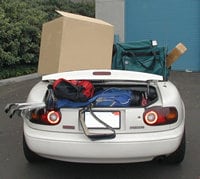
Be certain the car you desire can accommodate your daily needs.

You may also want to consider an extended warranty plan. Chances are an extended warranty or service contract will be offered to you by the dealership. An extended warranty covers a wide range of repairs and services. The repairs can be done at any authorized dealership and tend to be easily approved. You won't pay a penny for approved repairs unless your contract includes a deductible. You can also purchase an extended warranty from an independent company that could cost less than an extended service contract from a manufacturer.

Once you've established a price limit, steer clear of vehicles that barely squeeze under it. Leave yourself some wiggle room and shop for a less flashy vehicle with lower mileage or an older one in tip-top shape. You wouldn't want to buy the car of your dreams only to have it drain your bank account because you didn't factor in all of the costs of ownership.

Research the Right Car
Many professionals will tell you that this is where huge numbers of buyers make their biggest mistakes. They don't buy the vehicle that is best for their needs, but instead get smitten with something that doesn't fulfill their requirements, costs far too much money or, typically, both. Figuring out how much you want to spend was the easy part; now you have to find the vehicle that's right for you. But most buyers (yes, most), are not really sure what's out there or even what they need and want. Here are some suggestions: First, make a list of all the things you need your vehicle to do (haul kids, go off-road, get good gas mileage, be absolutely reliable, maintain good re-sale value, be easy to park) and then make a second list of all the things you admire in a vehicle (body style, colors, luxury options). Cross-reference the two. You should end up with a list of required and desired characteristics, which you can use to eliminate models that won't work for you (you can't haul kids in a two-seat sports car or operate a full-size sport utility vehicle on an economy-car fuel budget).

Use Helpful Internet Tools
There is a lot of information available on the internet but, many professionals will tell you, most buyers simply don't use that available information to their best advantage. To help, we've developed a couple of decision guides for refining your search. The Compare New Cars feature will put up to four new or used vehicles side by side for you to compare.

Another useful area of information will be the various websites for the manufacturers. Often, you can learn specifics about not only the new cars, but that manufacturer's previous models, as well. 


next